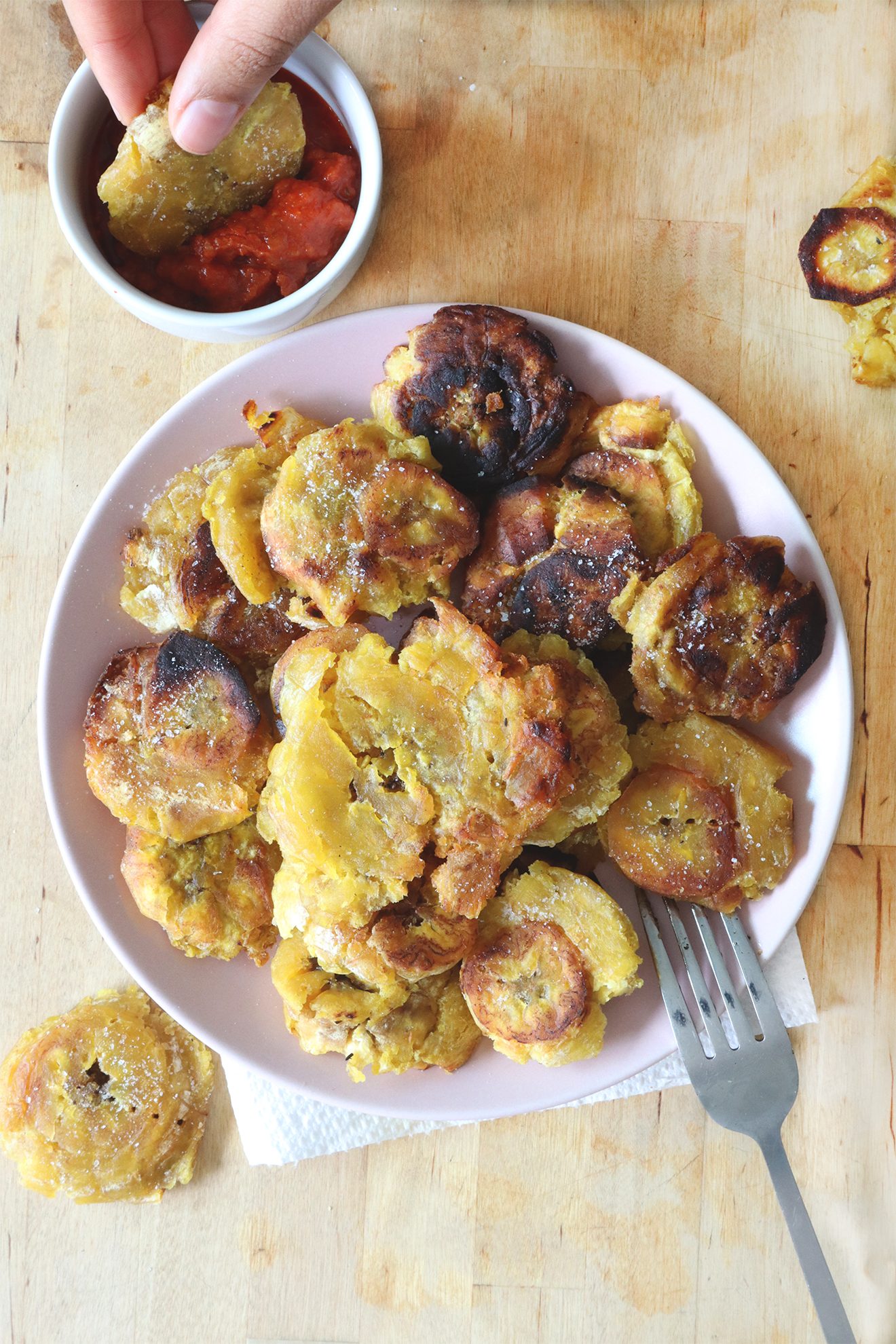
Tostones are one of those dishes that show up, in one form or another, across nearly the entire Caribbean and Latin America — fried twice, salted generously, and eaten hot, usually before they even make it fully to the table. Unlike sweet fried plantains (maduros), which use very ripe, blackened fruit, tostones are made from green, unripe plantains, which fry up starchy and savory rather than sweet, closer in spirit to a really good fry than to dessert.
The technique is simple but has a real rhythm to it: fry once to cook the plantain through, smash it flat, then fry again to crisp the outside. That second fry is what makes tostones tostones — without it, you'd just have a soft, pan-fried plantain slice, pleasant enough but missing the shatter-crisp edge that makes these worth making at all.
Why green, not ripe
A green plantain is almost entirely starch, with very little sugar — which is exactly why it works here. Frying a green plantain gives you something closer to a savory chip or a thick-cut fry: crisp outside, tender and slightly dense inside, with almost none of the caramelized sweetness you'd get from a black, fully ripe plantain. If your plantain has any yellow blush or soft spots, it will still work, but it's drifting toward maduro territory — the closer to fully green, the more traditional the result.
Ingredients & Nutrition
Instructions:
- Peel the green plantains — the skin is much tougher than a banana's, so it helps to slice off both ends first, score the skin lengthwise, and peel it back in sections rather than trying to pull it off in one piece.
- Slice the plantains into rounds about 1-inch thick.
- Heat the oil in a heavy skillet over medium heat until shimmering but not smoking.
- Fry the plantain rounds for 2-3 minutes per side, until pale golden and just tender when pierced with a fork. Remove to a paper-towel-lined plate.
- Smash each piece flat, either with the bottom of a glass, a tostonera if you have one, or between two sheets of parchment with the flat side of a plate — flatten to about half the original thickness.
- Fry again, in the same oil, for another 2-3 minutes per side, until deeply golden and crisp at the edges.
- Drain on fresh paper towels and salt generously while still hot — salt sticks best to hot, freshly fried surfaces.
- Serve immediately with a dipping sauce of your choice.
Tips for success
Don't skip the resting step between fries. Letting the first-fried pieces cool slightly before smashing keeps them from falling apart — piping hot plantain is softer and more likely to crumble under pressure than one that's had a minute to firm up.
Keep the oil temperature steady. Oil that's too hot browns the outside before the inside cooks through on the first fry; oil that's too cool makes for greasy, soggy tostones instead of crisp ones. Medium heat, maintained consistently, matters more here than in almost any other fried dish.
Salt immediately after the second fry, while the surface is still hot and slightly oily — salt added later won't stick nearly as well.
What to serve them with
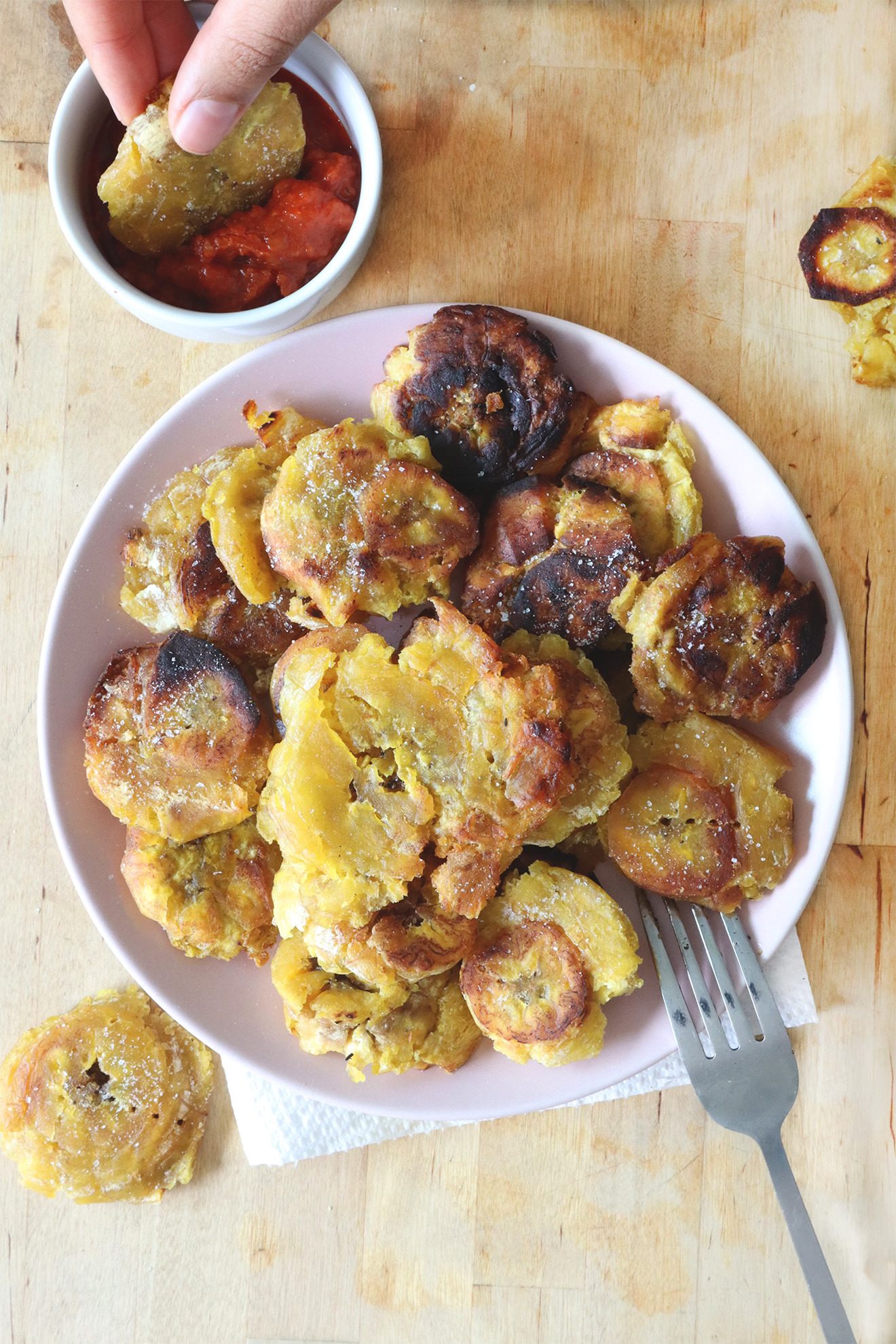
Tostones are traditionally served alongside a garlicky mojo sauce, but they're just as good with a simple spicy mayo, a squeeze of lime, or alongside the Vegan Scrambled Tofu for a full plate. They also hold up well as a base for toppings — piled with black beans, avocado, and salsa, they make a solid stand-in for tostadas.
Storage
Tostones are genuinely best eaten the moment they're salted — the crisp exterior softens within an hour or so as it cools. If you do have leftovers, store them in the refrigerator and re-crisp in a hot, dry skillet or air fryer rather than the microwave, which will leave them soft and a little rubbery.
Frequently asked questions
My tostones are greasy instead of crisp — what went wrong? Usually the oil wasn't hot enough. Test it before frying by dropping in a small piece of plantain — it should sizzle immediately and steadily, not sit quietly in the oil.
Can I bake these instead of frying? You can get a reasonably crisp result in the oven or air fryer, brushed with oil and flipped halfway through at 400°F, though the texture will be a bit drier and less richly crisp than the traditional double-fry method.